
Plant
VRF and VRV systems
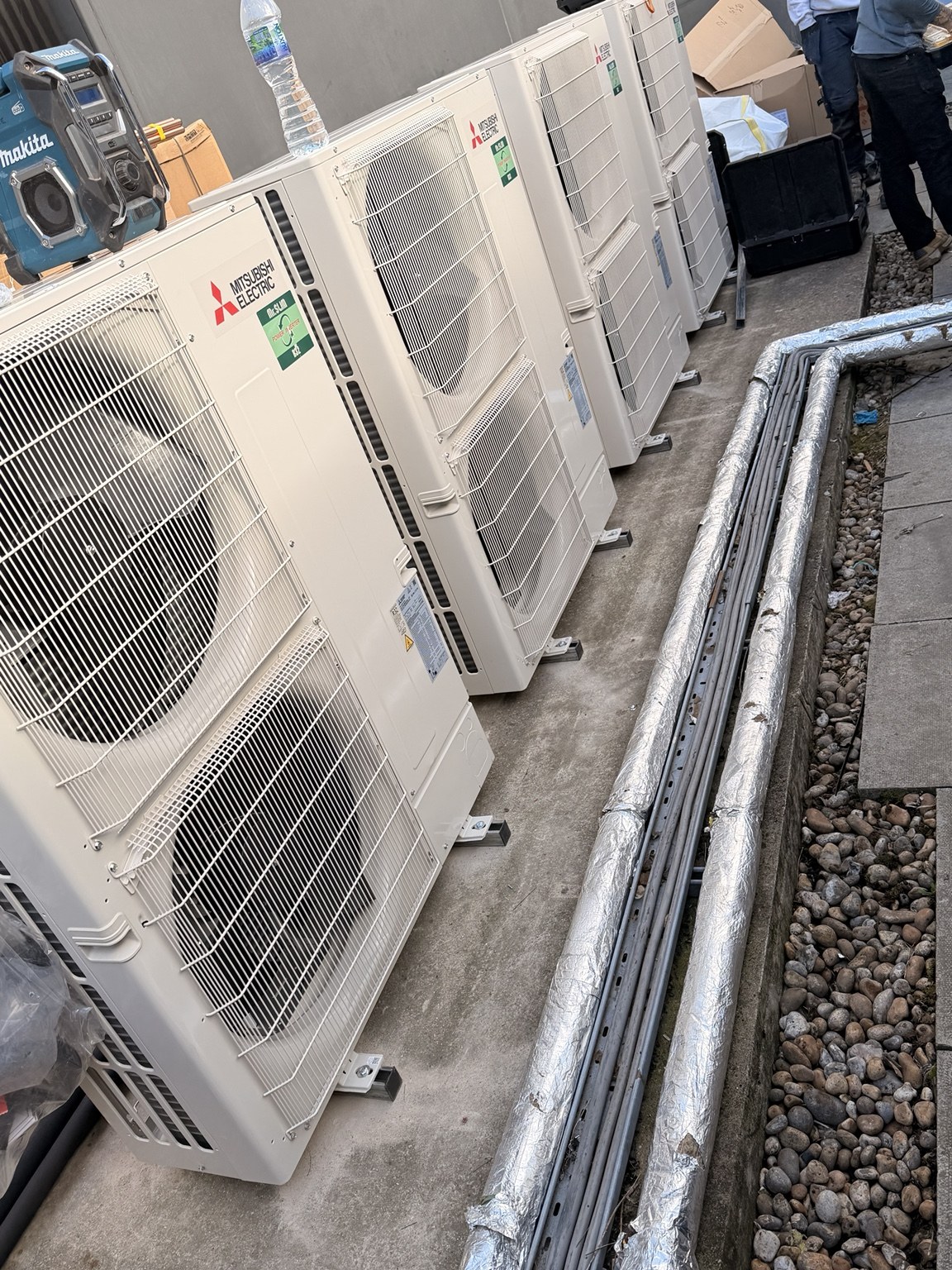
Multi-storey heat pump and heat recovery systems serving dozens of indoor units from a single refrigerant circuit — powerful when they are set up correctly, and unforgiving when they are not.
What we do with VRF
- Planned maintenance across whole systems, not just the units people complain about
- Branch controller and BC box servicing and fault diagnosis
- Communication and addressing faults across long cable runs
- Refrigerant leak detection, pressure testing and charge correction
- Controls, central controllers and time schedule review
- Indoor unit coil and drain cleaning, pump and float switch faults
- Phased replacement of end-of-life outdoor units
- System design and installation for new areas and fit-outs
Common VRF problems we get called to
One floor is warm, the rest are fine. Usually a branch controller, expansion valve or an indoor unit that has lost communication — not the outdoor unit everybody wants to condemn.
The system keeps tripping in hot weather. High pressure, and almost always a dirty condenser coil, a failed fan or recirculating air on a badly positioned rooftop.
Nobody can control it. Controllers locked out, schedules never commissioned, or tenant changes that were never reflected in the addressing.
Charge has been topped up repeatedly. That is a leak, and under F-Gas it has to be found and repaired rather than fed.
We work with equipment from Daikin, Mitsubishi Electric, Samsung, Carrier, Fujitsu, Toshiba, York and other major manufacturers.
Repair, or plan the replacement?
VRF reaches a point where the decision is no longer technical. Once outdoor units are obsolete, boards and compressors come from reclaimed stock, lead times stretch into weeks and the same circuit keeps losing charge, further repair is money spent on borrowed time. Older systems also run on refrigerants that are getting harder and more expensive to obtain.
Before advising either way we want the facts: system age and model, service and leak history, how much refrigerant has gone in and when, which indoor units are affected, and whether the fault is repeatable or seasonal. A pressure test and a proper leak search on the pipework tells you more than another top-up ever will.
Where replacement is right, most VRF can be changed in phases — outdoor units first, existing pipework reused where it tests clean and the refrigerant allows it, indoor units swapped floor by floor so the building keeps running. Where it is not right, we will say that too and give you the repair cost against the replacement cost.
VRF fault, or an ageing system to plan around?
Send the outdoor unit model, the affected areas and any recent refrigerant history. We will tell you what is worth diagnosing before anything is quoted.