
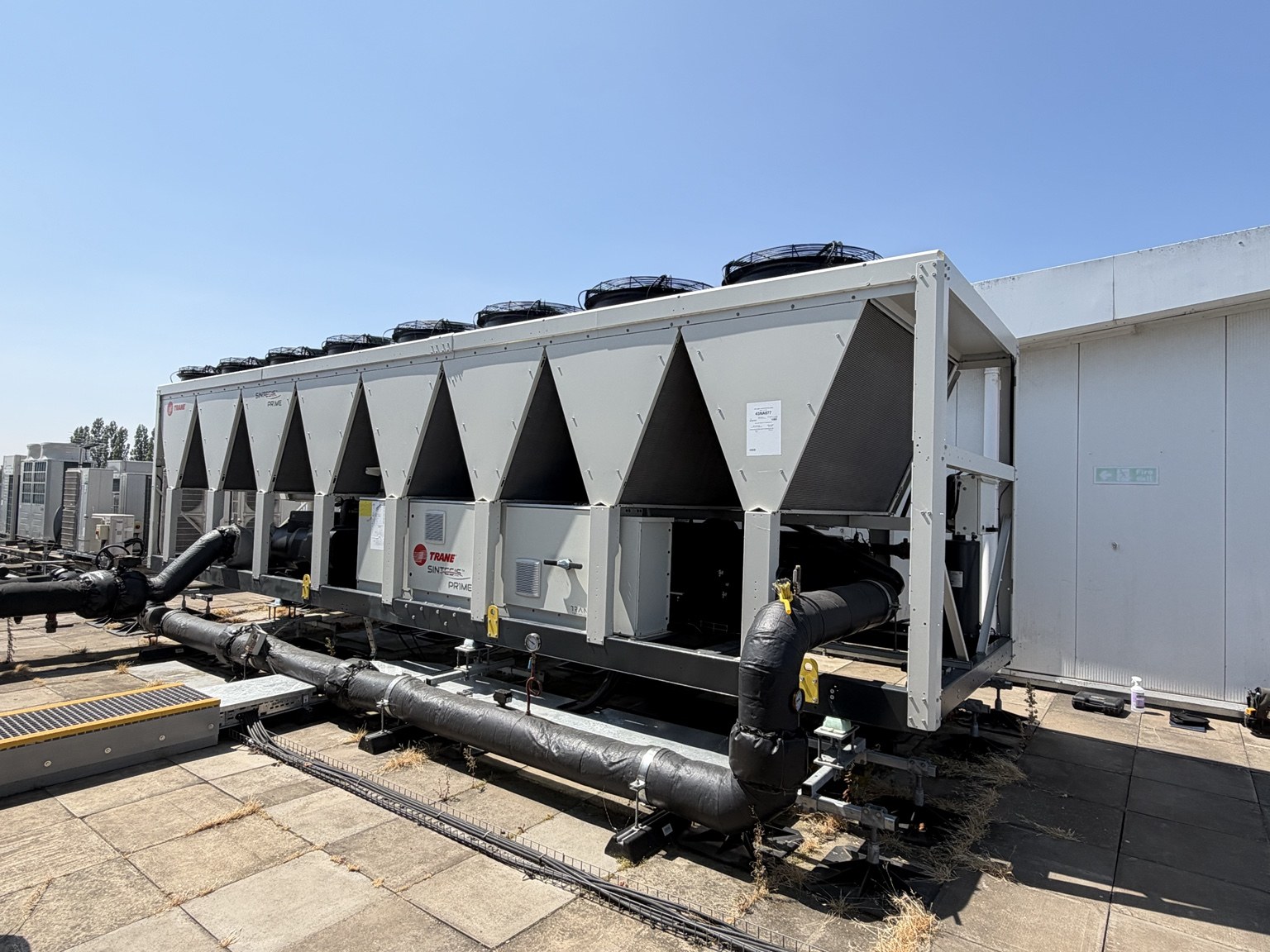
Plant
Commercial chiller support
When the chiller stops, the building stops. Chilled water plant needs a maintenance regime that looks at the whole system — not just the machine on the roof.
Chiller maintenance and repair
- Air-cooled chiller and packaged plant servicing
- Condenser coil cleaning and airflow assessment
- Compressor, contactor and electrical checks
- Operating pressures, superheat and subcooling analysis
- Refrigerant leak checking and F-Gas records
- Pump sets, strainers, valves and pressurisation units
- Water quality, glycol strength and inhibitor levels
- Controls, sequencing and free-cooling operation
What a chiller service visit covers
On the machine
- Condenser coil condition, cleaning and airflow around the unit
- Fan motors, blades and speed control operation
- Compressor running currents, contactors and terminations
- Suction and discharge pressures, superheat and subcooling
- Oil level and condition where the machine allows it
- Safety devices, pressure switches and alarm history
On the system around it
- Pump sets, strainers, isolation and non-return valves
- Pressurisation unit, expansion vessel and system pressure
- Water quality, glycol strength and inhibitor levels
- Flow rates, differential pressure and dirty-strainer symptoms
- Controls, sequencing, set-points and free-cooling operation
- F-Gas leak check to the frequency the charge requires
Scope is agreed per machine before the first visit — a packaged air-cooled unit and a multi-compressor plant on a roof do not need the same regime.
Repair or replace
Older chillers reach a point where refrigerant availability, parts lead times and declining efficiency make continued repair a poor investment. We would rather tell you that early than sell another emergency call-out.
Where replacement is the right answer, we survey the existing installation, assess structural, electrical and pipework implications, look at access and craneage, and set out the options — like-for-like swap, capacity change or a staged approach that keeps the building running during the works.
Chiller down, or planning ahead?
Send the make, model and what it is doing. For planned work, tell us the age of the plant and how critical the load is.